By Frank Mercado, E.Y. Mercado Construction — Helping You Build World-Class Cities
Water is the single most destructive force in buildings.
It corrodes steel.
It weakens concrete.
It creates leaks, mold, and structural deterioration.
Globally, over 70% of building failures are moisture-related, and the Philippines—being a typhoon-exposed, humid, and flood-prone country—faces an even higher risk.
This is why waterproofing is not cosmetic work.
It is structural insurance.
1. Where Philippine Buildings Commonly Fail
In EYMC’s project data and industry-wide assessments, leaks often come from detailing mistakes, not from membrane defects alone.
Top 7 Failure Points in PH Buildings
- Cold joints – slab-to-beam, slab-to-wall interfaces left untreated.
- Pipe penetrations – round pipes in square holes create micro-gaps.
- Deck parapet and gutter intersections – where 3 planes meet, membranes often wrinkle.
- Expansion joints – improperly sealed or using the wrong sealant grade.
- Coved areas – sharp 90-degree corners cause membrane stress and cracking.
- Improper substrate preparation – laitance not removed, resulting in poor adhesion.
- UV degradation – common in roof decks using non-UV-stabilized materials.
Bottom line:
Buildings rarely leak at the center of the slab.
They leak at the edges, joints, corners, and penetrations—because this is where detailing matters.
2. Why EYMC’s Membrane + Detailing System Works
EYMC waterproofing is built on three engineering principles:
(1) Continuous Protection
A membrane is only as strong as its weakest lapse in continuity.
EYMC uses:
- Reinforced sheet membranes or PU layers
- Seam overlap standards (minimum 75–100 mm)
- Hot-air welds or chemical bonds depending on material
(2) Correct Detailing at Critical Areas
This is where 90% of failures occur.
EYMC applies:
- Pre-formed corner pieces
- Fabric-reinforced PU at stress points
- Flashing integrated into the membrane, not afterthoughts
(3) Scientific Substrate Preparation
We conduct:
- Moisture testing
- Pull-off adhesion testing
- Slope correction (minimum 1–2% for roof decks)
- Mechanical cleaning and priming
Many contractors simply “apply membrane.”
EYMC engineers waterproofing.
3. Comparing Waterproofing Solutions: PU vs. TPO vs. Others
Each system has strengths. The key is matching use-case, expected lifespan, and environment.
A. Polyurethane (PU) Liquid-Applied Membrane
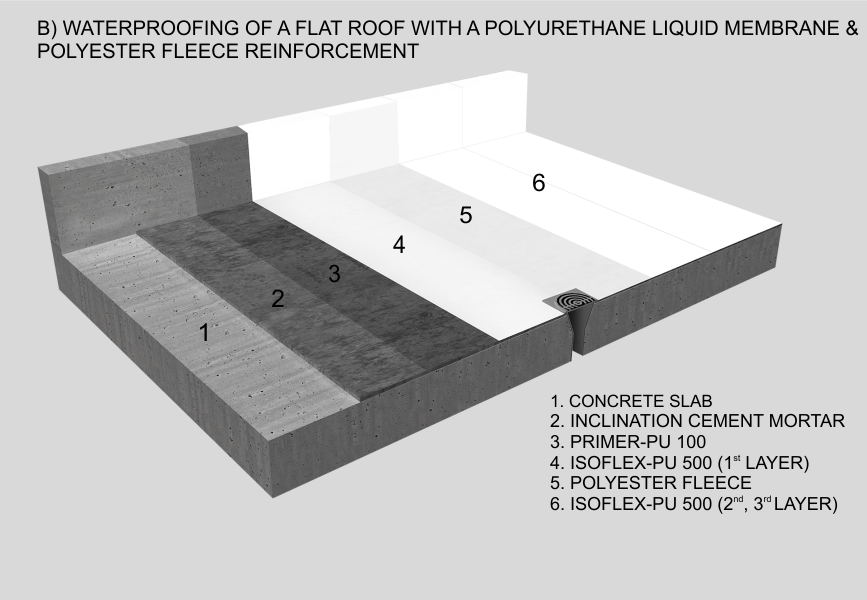
Best for: Roof decks, balconies, planter boxes, wet areas
System Type: Liquid, seamless, flexible
Advantages
- Seamless (no laps)
- Excellent crack-bridging
- Strong adhesion
- Easy to detail around pipes and tight areas
Limitations
- Sensitive to moisture during curing
- Requires skilled applicators
- UV protection needed (topcoat or screed)
Typical Warranty: 5–10 years (depending on thickness & topcoat)
B. TPO (Thermoplastic Polyolefin) Sheet Membrane
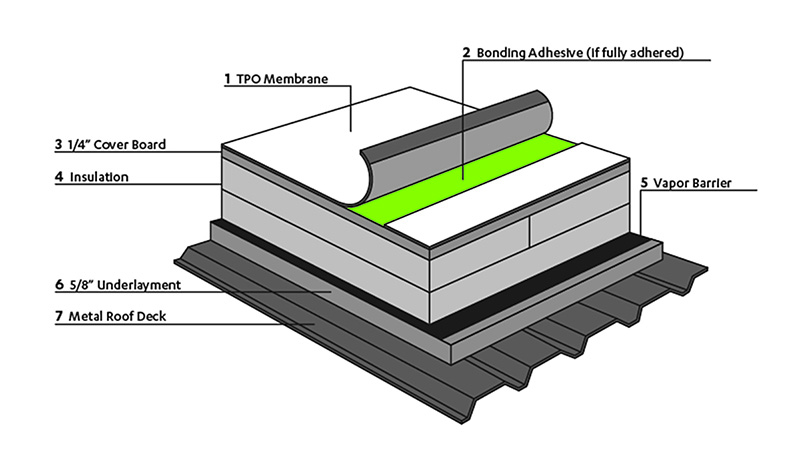
Best for: Large roof decks, industrial buildings, malls
System Type: Heat-welded sheet membrane
Advantages
- UV resistant out of the box
- Fast installation on large surfaces
- Welded seams = high integrity
- Energy-efficient (reflective white surface)
Limitations
- Difficult to detail on complex corners
- Requires immaculate substrate
- Mechanical fasteners must be engineered correctly
Typical Warranty: 10–20 years
C. Cementitious Crystalline Waterproofing
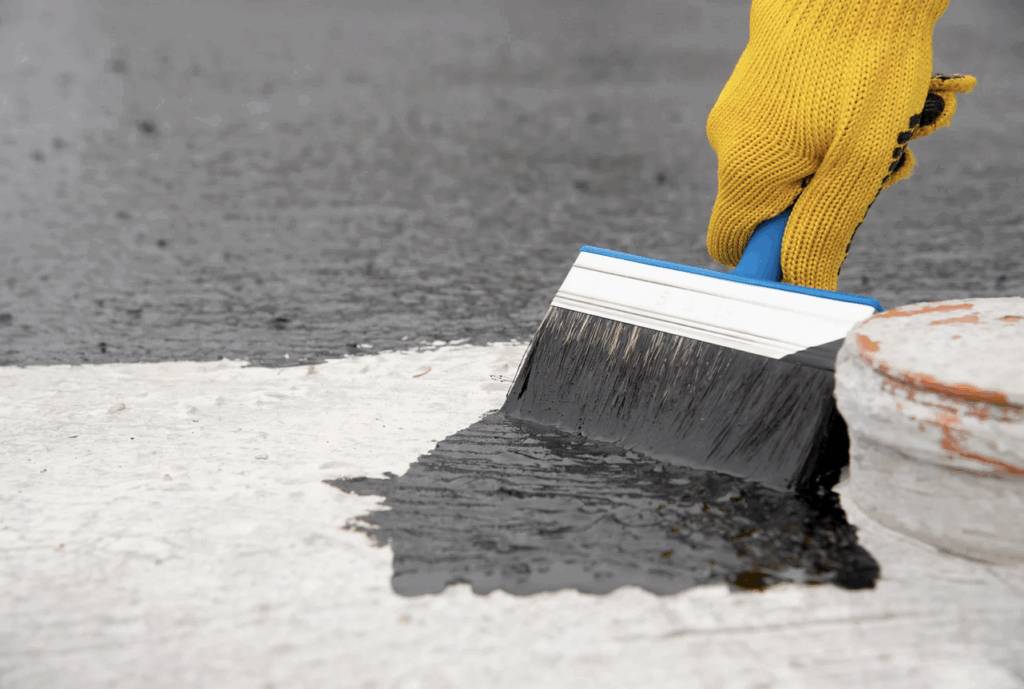
Best for: Basements, water tanks, retaining walls
System Type: Cement-based; reacts with concrete
Advantages
- Permanent as long as concrete is intact
- Good for negative-side waterproofing
- Easy application
Limitations
- Not suitable for moving cracks
- Needs crack-injection backup if leaks occur
Typical Warranty: 5–10 years
D. Bituminous Membrane (Torch-Applied)
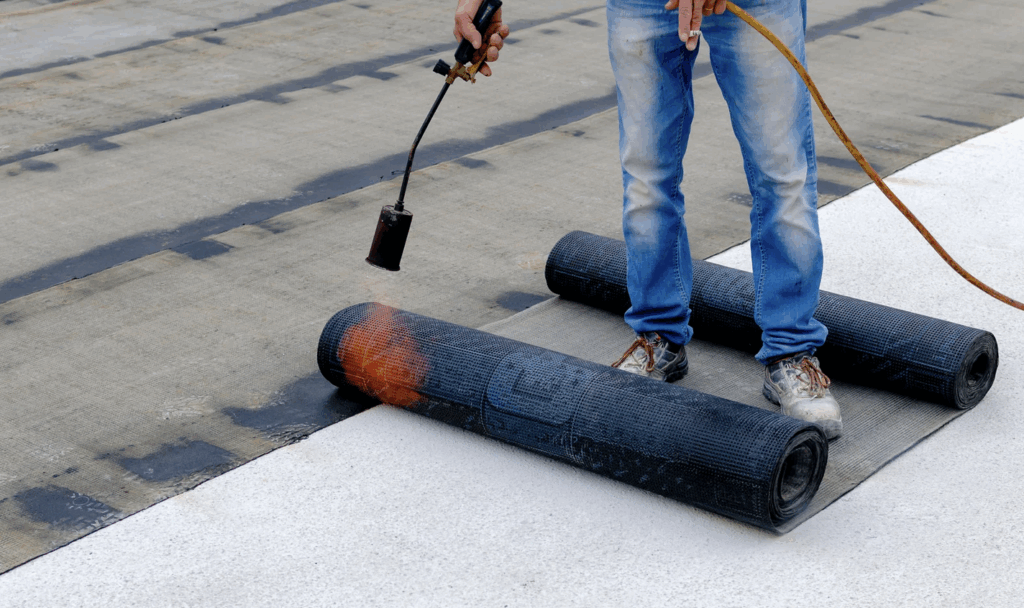
Best for: Low-budget roof decks
System Type: Torch-on sheets
Advantages
- Low cost
- Thick, durable base layer
Limitations
- Seams can fail
- UV exposure degrades quickly
- Not ideal in PH heat cycles
Typical Warranty: 3–5 years
How to Choose the Right System
| Location | Best System | Why |
|---|---|---|
| Roof Deck (Large Areas) | TPO | UV-resistant, durable, fast installation |
| Roof Deck (Complex Details) | Polyurethane | Seamless, high flexibility |
| Bathrooms / Wet Areas | PU or Cementitious | Penetration-friendly and bonding |
| Basements / Tanks | Crystalline | Works with concrete chemistry |
| Budget Roofs | Bituminous | Cost-effective but shorter life |
EYMC Selection Principles
- Match the material to movement
– Roof decks move → use flexible systems. - Match the material to exposure
– UV → use TPO or topcoated PU. - Match the material to drainage
– Ponding areas need PU or TPO, not cementitious. - Match the material to lifetime cost
– A 20-year system is cheaper long-term than a 5-year break-fix cycle.
4. Case Studies: EYMC Real-World Solutions
CASE STUDY 1: Commercial Mall Roof Deck (5,000 sqm)
Problem: Chronic leaks despite multiple patch repairs
Diagnosis: Failed laps in old torch-on membrane; poor drainage slope
EYMC Solution:
- Remove old membrane
- Install TPO with hot-air welded seams
- Add slope correction mortar
Result:
• Zero leaks in 4 years
• Energy savings from reflective surface
• Warranty: 15 years
CASE STUDY 2: High-Rise Condo Balconies
Problem: Water intrusion affecting units below
Diagnosis: Hairline cracks + improper upturn detailing
EYMC Solution:
- PU liquid membrane with fabric reinforcement
- Proper termination bar installation
Result:
• All affected balconies sealed
• Prevented repainting and structural repairs
• Warranty: 8 years
CASE STUDY 3: School Building with Leaking Classrooms
Problem: Gutter and parapet interface failure
Diagnosis: Membrane lifted due to UV and heat cycles
EYMC Solution:
- PU membrane with UV-resistant topcoat
- Corrected parapet termination detail
Result:
• Zero leaks during rainy season
• Improved learning environment
• Warranty: 6 years
5. Warranty Expectations in the Philippine Market
| System | Typical Warranty |
|---|---|
| TPO | 10–20 years |
| Polyurethane | 5–10 years |
| Cementitious | 5–10 years |
| Bituminous Torch-on | 3–5 years |
EYMC Warranty Advantage
We pair material warranty with workmanship warranty, which most contractors do not provide.
Because quality of installation is 70% of waterproofing success.
CONCLUSION: Waterproofing Is a Science, Not a Patchwork Job
EYMC continues to lead by treating waterproofing as a core engineering discipline, not a side task.
When you control water,
you extend building life,
reduce repair costs,
and protect communities.
This is how EYMC helps you build world-class cities—one dry, resilient structure at a time. Email us for a quotation at info@eymcglobal.com.